
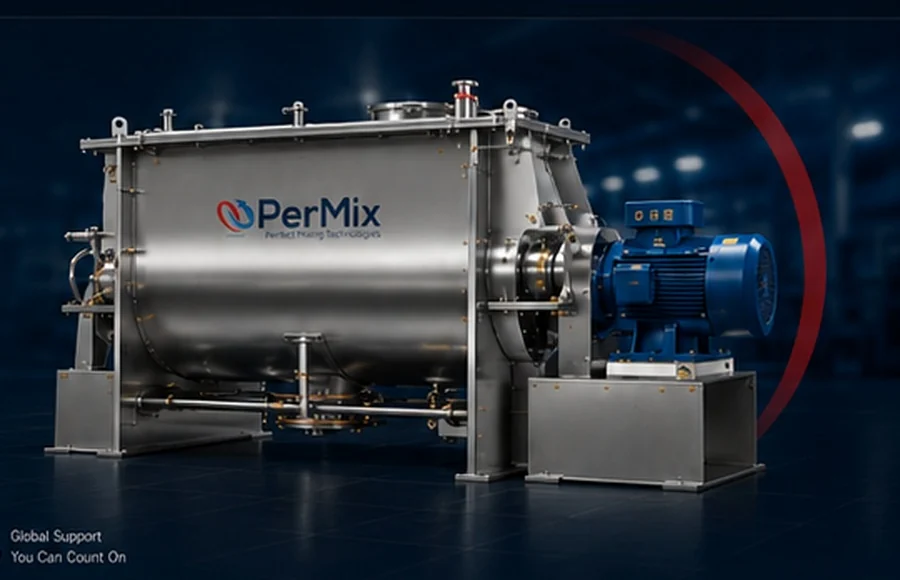
Industrial mixing solutions by industry
Industrial Mixers for Chemicals & Specialty Materials
Robust mixing systems for pigments, additives, catalysts, detergents, coatings, resins and specialty formulations.
Proven Global Technology
Built for Demanding Industries
North American Support

Mix
Solve
Create
A Brighter
Tomorrow
Process challenges
Engineering Around Your Material and Production Goals
Abrasive or corrosive materials
Cohesion, dust and agglomeration
Thermal control and reaction risk
Hazardous-area or pressure requirements
Recommended platforms
Mixers for This Industry
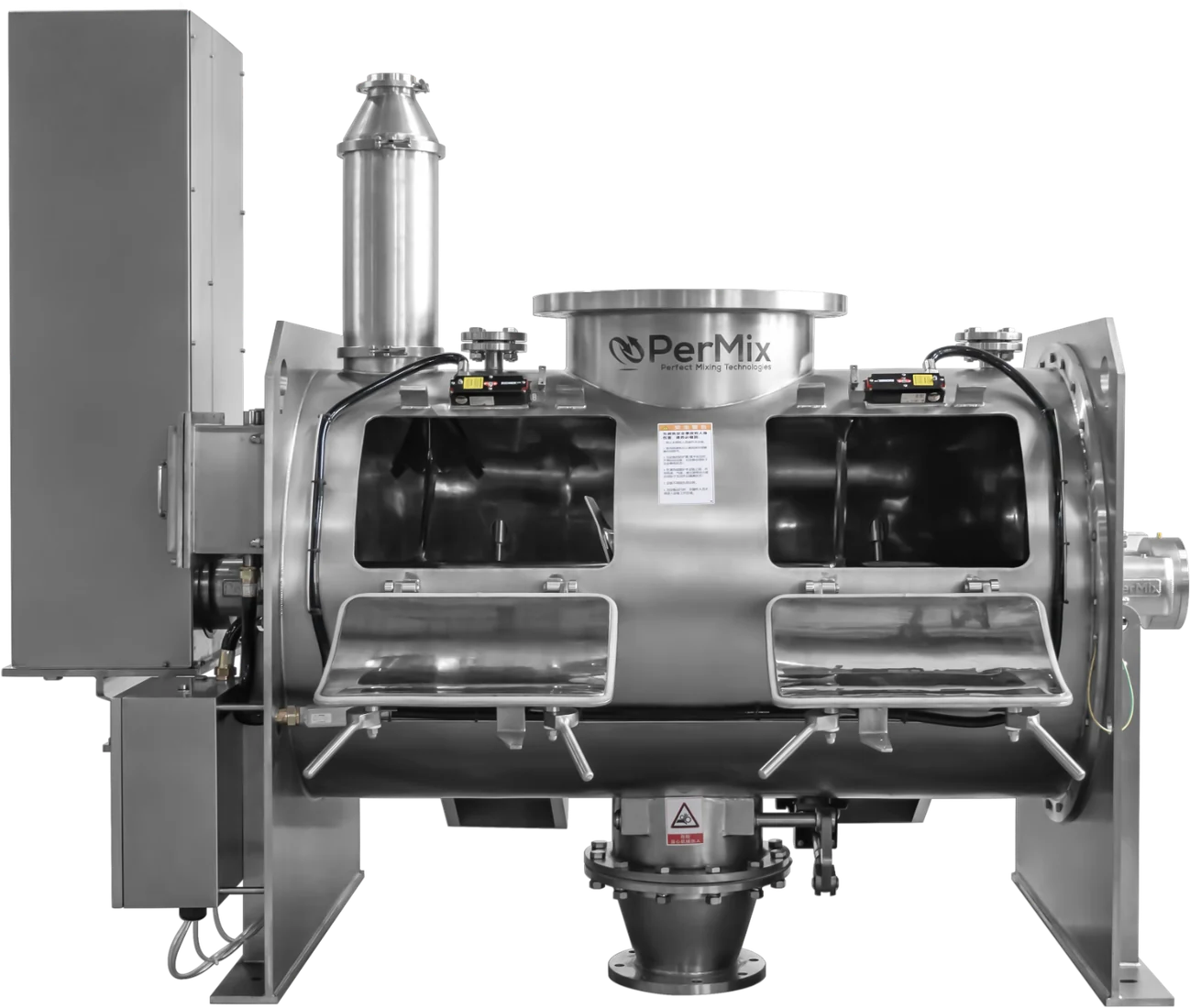
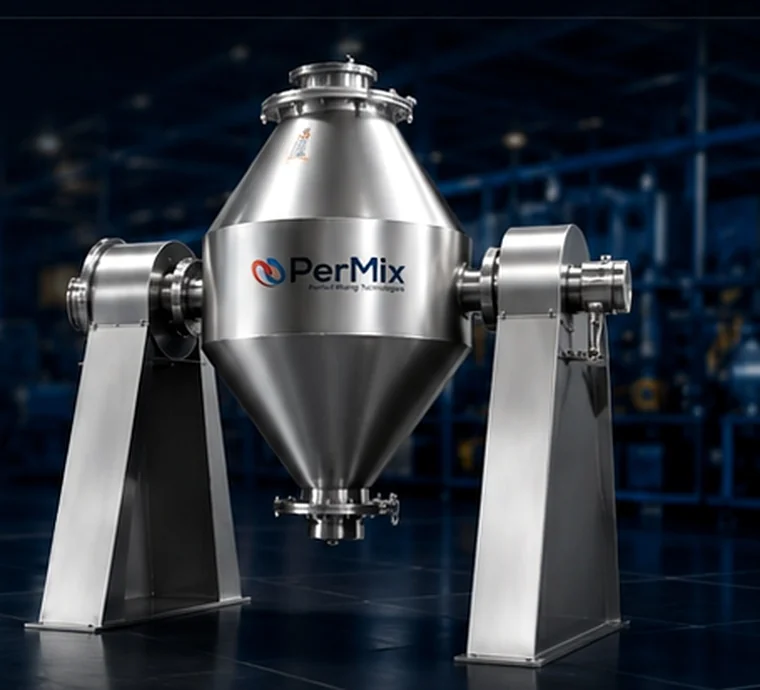
Double Cone Mixers
Gentle tumble blending with simple construction and complete discharge.
Process capabilities
From Standard Blending to Engineered Systems
Standard PerMix
Atmospheric powder and granule blending with optional low-pressure jackets.
QuantumX
Vacuum, pressure, ASME, ATEX, containment and custom specialty systems.
EmulXion
Liquid mixing, emulsification, homogenization and powder induction.
Case studies & insights
Resources for Your Industry
Technical article
Cohesive Powder Mixing and Deagglomeration
How cohesion, moisture, electrostatics and soft agglomerates influence mixer intensity, chopper selection and batch time.
Technical article
Vacuum Mixing and Drying: Building the Design Basis
The data required to size a vacuum mixer or mixer-dryer, including vapor load, heat sensitivity, filtration and solvent recovery.
Technical article
Information Required for an ATEX Mixer Design
The area classification, material hazard data and operating scenarios needed before selecting hazardous-area mixing equipment.
Technical article
Low-Pressure Jackets vs. ASME Mixer Systems
Understand when a standard non-ASME jacket is appropriate and when vacuum, pressure or code-rated service moves to QuantumX.
Case study
Plough Mixer for Powder Coating and Liquid Addition
An application framework for distributing a liquid onto cohesive powder while controlling agglomeration and cycle time.
Technical article
Ribbon vs. Paddle vs. Plough Mixer Selection
A practical comparison of material movement, shear, liquid addition, particle fragility and deagglomeration capability.
Frequently asked questions
Industry Mixing FAQ
What are the four standard PerMix mixer categories?
PerMix standard mixers are organized into ribbon mixers, plough mixers, paddle mixers and double cone mixers. Ribbon and paddle families include horizontal and vertical configurations.
What makes a mixer a standard PerMix model?
A standard model is intended for atmospheric, non-ASME service. It may include a low-pressure non-ASME heating or cooling jacket.
When is a mixer classified as QuantumX?
Vacuum, internal pressure, ASME code construction, ATEX execution, high containment, high-pressure thermal service or substantial custom process integration move the project to QuantumX.
Where are liquid mixers shown?
Liquid mixing, emulsification, dispersion and homogenization are organized under the EmulXion liquid-processing platform.
How is mixer working volume calculated?
Working volume is the usable batch volume at the selected fill level, not the gross geometric vessel volume. It is determined from batch mass divided by loose or operating bulk density, with allowance for the mixing action and process additions.
How do I choose between ribbon, paddle, plough and double cone mixers?
Start with material flowability, cohesiveness, fragility, density variation, particle-size distribution, liquid addition, required shear, sanitation, cycle time and discharge behavior. The selection guide compares each technology.
Get expert advice
Request Engineering Support
Tell us about your application and our mixing experts will help you find the right solution.
A trusted partner for North America
Global Technology.
Local Support.
Global & Experienced
Established mixing platforms
Engineering Solutions
Factory-to-field support
Timely, Local
Dedicated project response